
Photo · Anatomist90 · Wikimedia Commons
Journal
Degenerative spondylolisthesis in the low back
Degenerative spondylolisthesis is a slip of one lumbar vertebra on the one below it, usually with arthritis and stenosis. The Alignment Clinic reviews the trials that compared surgery with nonoperative care.

The Alignment Clinic and this problem
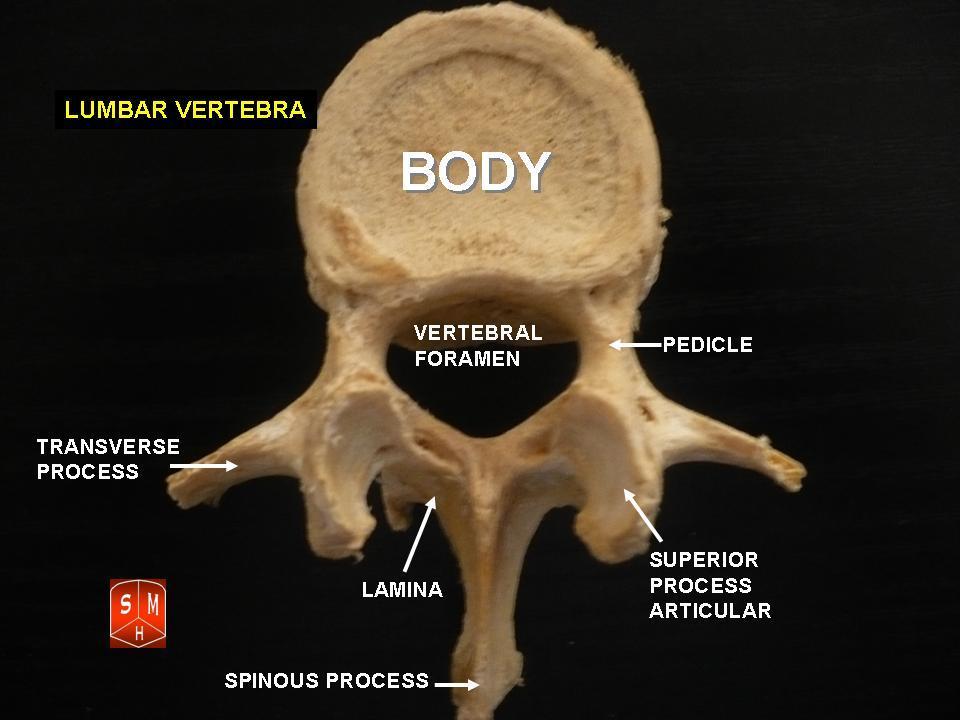
In degenerative spondylolisthesis, one lumbar vertebra shifts forward on the next as the disc and the small joints wear. The slip often narrows the canal, so people describe heaviness or pain in the legs after they walk, and relief when they sit or lean on a cart. Back ache may be there too. The slip on an X-ray is only part of the story.
What the researchers studied
The New England Journal of Medicine published a 2007 comparison of surgery and nonoperative care for lumbar degenerative spondylolisthesis, from the Spine Patient Outcomes Research Trial. The Journal of Bone and Joint Surgery published the four-year results in 2009. A 2017 review in the Journal of Orthopaedic Translation looked at how common the slip is, including differences by age.
What they found
The trial found that people who had surgery reported better pain and function over the years of follow-up than people who stayed with nonoperative care, with the usual caution that some people changed treatments along the way. The epidemiology review describes the slip as a condition of aging joints, not a rare injury. Neither paper says that every slip needs a fusion. The decision depends on symptoms, stenosis, and whether the vertebra moves.
How The Alignment Clinic approaches this
Standing X-rays show the slip and whether it moves. MRI shows the nerves. If walking is limited and the images match, decompression is discussed, and fusion is added when the slip is unstable or the decompression would leave the level loose. If symptoms are mild, observation and therapy remain reasonable.
What a visit can clarify
A visit can tell a stable ache from a slip that is limiting walking, and whether fusion would add something a decompression alone would not. This note is general information and is not a personal treatment plan.
Read next
The papers behind this note
- NN Engl J Med · 2007Surgical versus nonsurgical treatment for lumbar degenerative spondylolisthesis
- JJ Bone Joint Surg Am · 2009Surgical compared with nonoperative treatment for lumbar degenerative spondylolisthesis. Four-year results
- JJ Orthop Translat · 2017Lumbar degenerative spondylolisthesis epidemiology: a systematic review