
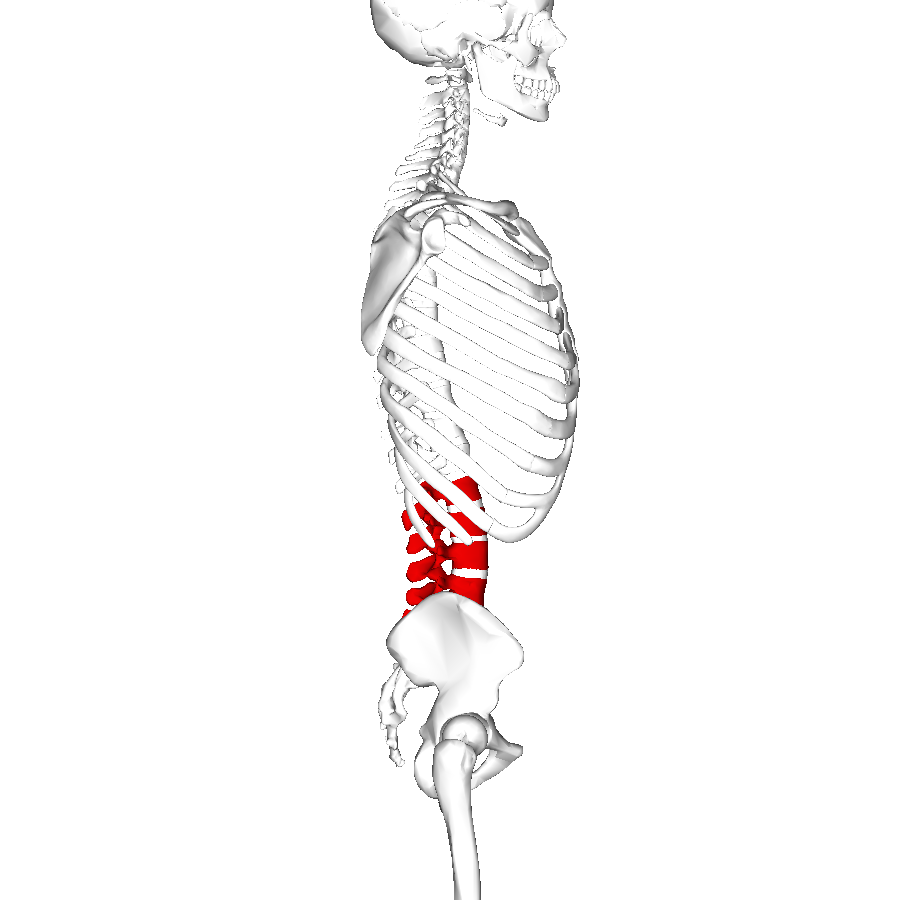
Photo · Anatomography · Wikimedia Commons
Journal
Laminectomy for lumbar spinal stenosis
A laminectomy opens room for nerves that have been crowded by lumbar stenosis. The Alignment Clinic explains the trials that asked when fusion should be added, and when decompression is enough.

The Alignment Clinic and this problem
Lumbar stenosis means the canal or the openings for the nerves have narrowed, usually from arthritis, thickened ligament, and disc changes. Walking brings on heaviness or pain in the legs. Sitting eases it. A laminectomy removes a small amount of bone and ligament so the nerves have room. It is a decompression. It does not, by itself, fuse the spine.
What the researchers studied
A 2005 paper in the Journal of Neurosurgery: Spine compared less-invasive decompression with a wider opening for lumbar stenosis. A 2014 paper in the same journal looked at results after decompressive laminectomy, including a less invasive one-sided approach. In 2016 the New England Journal of Medicine published a trial of laminectomy plus fusion versus laminectomy alone for stenosis that also had a spondylolisthesis.
What they found
Decompression can be done through a smaller opening in selected people, and the studies watch for whether the nerves are truly freed and whether the level stays stable. The 2016 trial studied a specific group: stenosis together with a slip. Adding fusion helped that group in that trial. Other people with stenosis and little slip are often treated with decompression alone. The research supports a choice, not one operation for every narrow canal.
How The Alignment Clinic approaches this
Walking limits, standing X-rays, and MRI are read together. If the nerves are crowded and the vertebrae are stable, laminectomy or a similar decompression is the usual discussion. If a vertebra slips or moves, fusion may be added so the level does not loosen after the bone is removed. Therapy and pacing still help people who are not ready for an operation, or who do not need one.
What a visit can clarify
A visit can tell stenosis that limits walking from ordinary back fatigue, and whether fusion would be doing useful work or extra work. This note is general information and is not a personal treatment plan.