
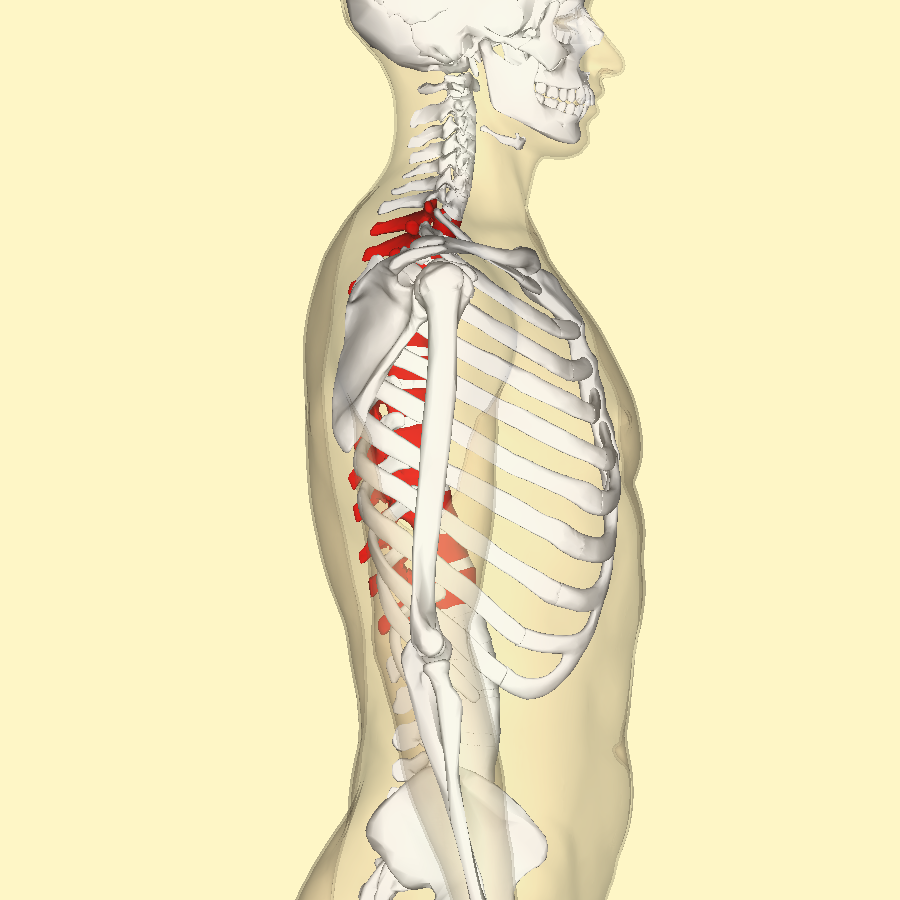
Photo · Anatomography · Wikimedia Commons
Journal
Understanding Sagittal Alignment & Adult Spinal Deformity at The Alignment Clinic
At The Alignment Clinic, we specialize in understanding sagittal alignment and its impact on adult spinal deformity (ASD). Research highlights the importance of maintaining proper spinal alignment to enhance quality of life. This article explores the latest findings and approaches in managing ASD.

The Alignment Clinic and this problem
At The Alignment Clinic, we specialize in understanding sagittal alignment and its critical role in adult spinal deformity (ASD). ASD is characterized by three-dimensional abnormalities in the spine that can significantly affect a person's quality of life. Research indicates that the loss of lumbar lordosis, or the natural inward curve of the lower back, is a significant contributor to ASD. This condition can lead to complications such as increased kyphosis, pelvic retroversion, and knee flexion, all of which can exacerbate the deformity and its associated challenges (Kim et al., Journal 2020). What the researchers studied Recent studies have focused on various aspects of sagittal alignment and its influence on surgical outcomes for patients with ASD. One notable study evaluated the effectiveness of different classification systems, including the SRS-Schwab classification and the newly developed Sagittal Age-Adjusted Score (SAAS). These methodologies aim to predict surgical outcomes and complications such as proximal junctional kyphosis (PJK), which can occur after surgery (Lafage et al., Journal 2022). Researchers have also examined the effects of overcorrection in surgical alignment, emphasizing the need for careful adjustments based on a patient's age and spinal characteristics (Byun et al., Journal 2022). What they found Findings from these studies reveal that maintaining an appropriate sagittal alignment is essential for minimizing complications and enhancing quality of life in ASD patients. For instance, a study showed that overcorrection of spinal alignment can lead to a higher incidence of PJK, particularly in patients whose alignment deviated significantly from age-adjusted norms (Line et al., Journal 2020). Additionally, the SAAS methodology demonstrated that a considerable percentage of patients were either under-corrected or over-corrected following surgery, which can impact their recovery and overall well-being (Lafage et al., Journal 2022). How The Alignment Clinic approaches this At The Alignment Clinic, our approach to managing ASD focuses on restoring harmonious sagittal alignment tailored to each patient's unique needs. We utilize advanced classification systems like the SRS-Schwab and SAAS to evaluate spinal alignment and guide treatment decisions. Our goal is to create a patient-specific management plan that considers individual risk factors and comorbidities, thereby minimizing the risk of complications and improving health-related quality of life (HRQoL) (Kim et al., Journal 2020). We also emphasize the importance of avoiding overcorrection during surgical procedures to prevent issues such as PJK, which can significantly affect recovery (Line et al., Journal 2020). What a visit can clarify During your visit to The Alignment Clinic, we will conduct a thorough evaluation of your spinal alignment and discuss your specific concerns. This may involve imaging studies and assessments to determine the best course of action for your situation. We aim to provide you with a clear understanding of your condition and the potential impact of different treatment options. Our team is dedicated to helping you navigate the complexities of ASD and ensuring that you receive personalized care based on the latest research and best practices in the field. This note is general information and is not a personal treatment plan.
The papers behind this note
- JJournal · 2020Adult Spinal Deformity: Current Concepts and Decision-Making Strategies for Management.
- JJournal · 2020Effective Prevention of Proximal Junctional Failure in Adult Spinal Deformity Surgery Requires a Combination of Surgical Implant Prophylaxis and Avoidance of Sagittal Alignment Overcorrection.
- JJournal · 2022Sagittal age-adjusted score (SAAS) for adult spinal deformity (ASD) more effectively predicts surgical outcomes and proximal junctional kyphosis than previous classifications.
- JJournal · 2022Effect of overcorrection on proximal junctional kyphosis in adult spinal deformity: analysis by age-adjusted ideal sagittal alignment.
- JJournal · 2021Dynamic sagittal alignment and compensation strategies in adult spinal deformity during walking.